
Every strategic decision begins by identifying what’s working well for your audience and what needs to shift. As communications professionals, we can usually pinpoint the culprit of what’s not working well pretty quickly, but it takes a bit longer to uncover why.
One of the first things we do when developing audience-informed messaging and communications strategies is connect directly with the audiences on the receiving end of your communications, whether it’s an email, a fundraising ask or an Instagram Reel.
These conversations offer a tremendous amount of insight into how your organization shows up for the communities that matter most, what value you bring and where you might be falling short. The ideas, perspectives and criticisms of your audiences matter and can go a long way in building trust, strengthening relationships and defining strategy.
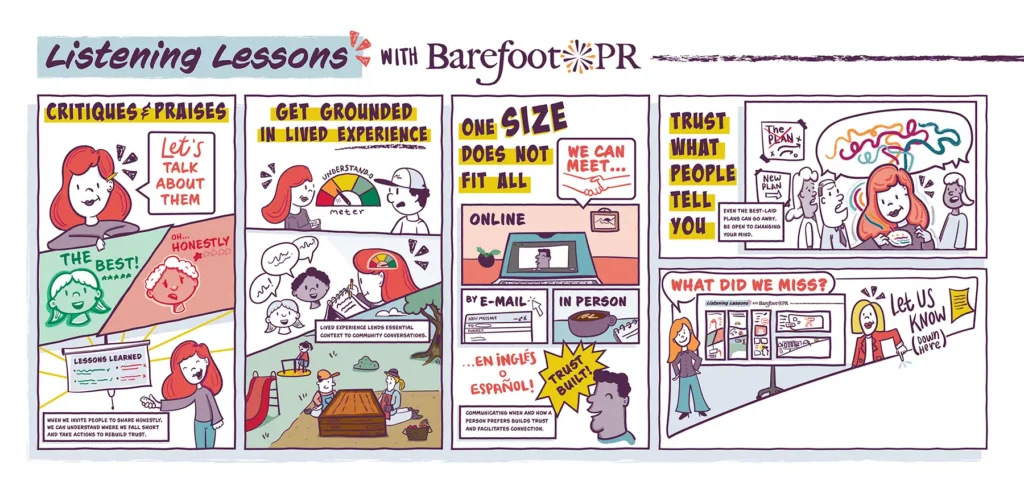
Here are 5 best practices we follow to facilitate productive, honest community conversations.
- Meet people where they are. Not everyone has the bandwidth for a Zoom meeting at 3pm on a Tuesday. Offer flexibility in how and when you connect, either by phone, video call, email or in person. When people feel accommodated and prioritized, they show up more openly.
- Do your homework. Prepare for the conversation by researching the person’s role, their relationship to the organization and even their hobbies or interests. This allows you to ask more thoughtful, tailored questions.
- Spend time being human. Before diving into your questions, take a few minutes to establish a genuine connection. Acknowledge a shared experience, reference something meaningful about their work or simply have a real human moment to move the conversation out of “interview mode” and into real dialogue.
- Be open to going off script. Don’t feel like you have to stick to your agenda questions. If someone mentions something in passing that sounds important, follow it. Some of the most valuable insights surface when a conversation takes an unexpected turn.
- Listen to learn. When something sounds interesting but incomplete, ask a follow-up question to make sure you’ve understood correctly. Active listening signals that their perspective genuinely matters.
Curiosity and connection are at the heart of meaningful and effective communications. If you’re equally curious about how your organization’s messaging and communications strategies are landing with your audiences, we’d love to team up and help you discover more.